Projects /
Browser extension
Oops, I Read The Terms
A browser extension our team built at the Design Thinking and Entrepreneurship Workshop 2026 in Hamburg. Click it on any site and it tells you in plain words what you're agreeing to.
Nobody reads terms of service. They’re long, they’re written in legal language that is hard to understand for people that aren’t lawyers, and the “I agree” button is right there. That was the problem our team picked at the Design Thinking and Entrepreneurship Workshop in Hamburg, and “Oops, I Read The Terms” is what we built.
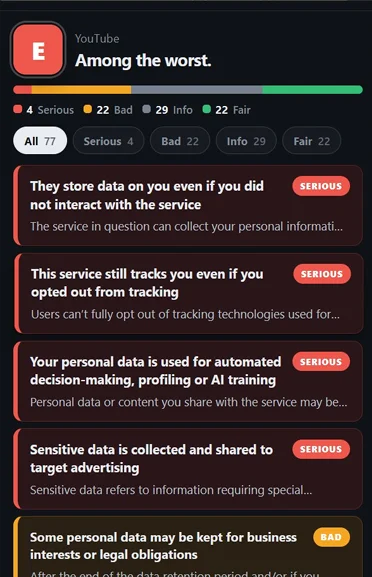
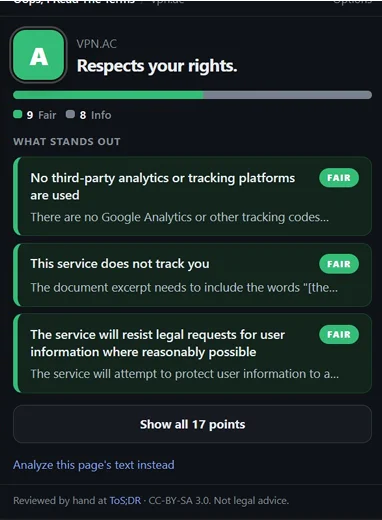
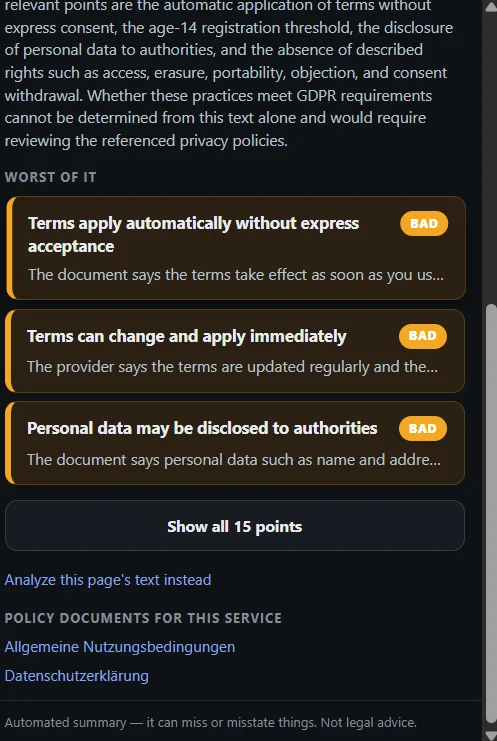
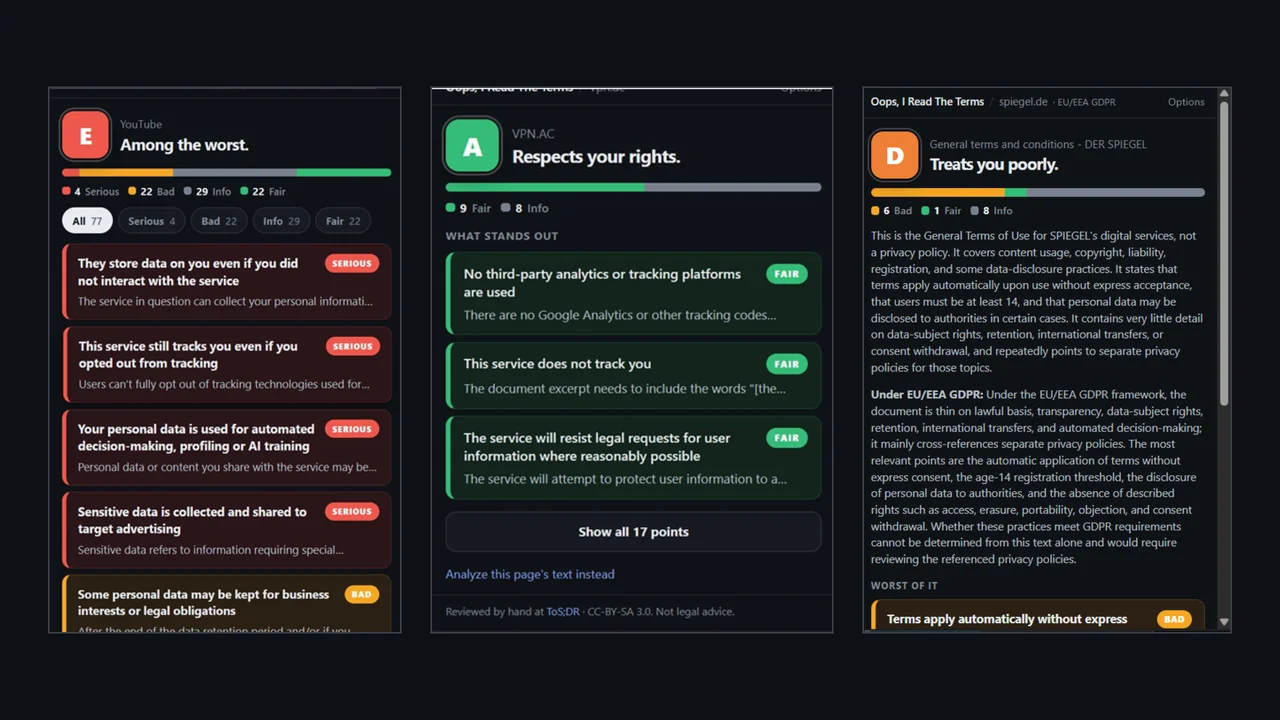
You click the extension on any site and get a grade from A to E, a one-line verdict (“Among the worst.” for YouTube), and the three worst things about the terms. The rest is one click away, with each point labelled Serious, Bad, Info or Fair.
Two sources
First it checks ToS;DR (Terms of Service; Didn’t Read), where people (most of which are professional experts in consumer and data protection laws) have already reviewed thousands of services by hand. That’s instant and free, and it covers most of the big sites.
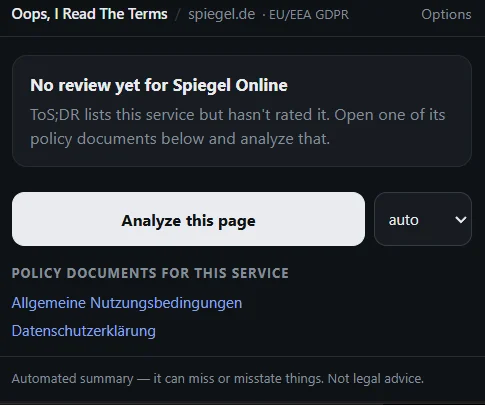
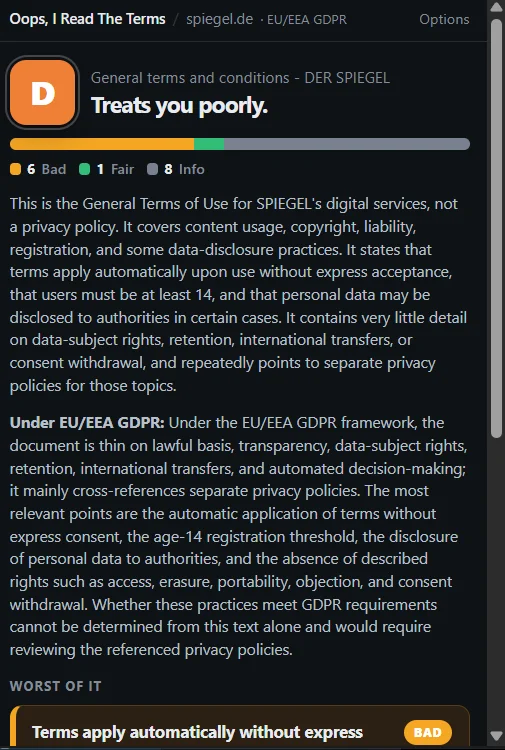
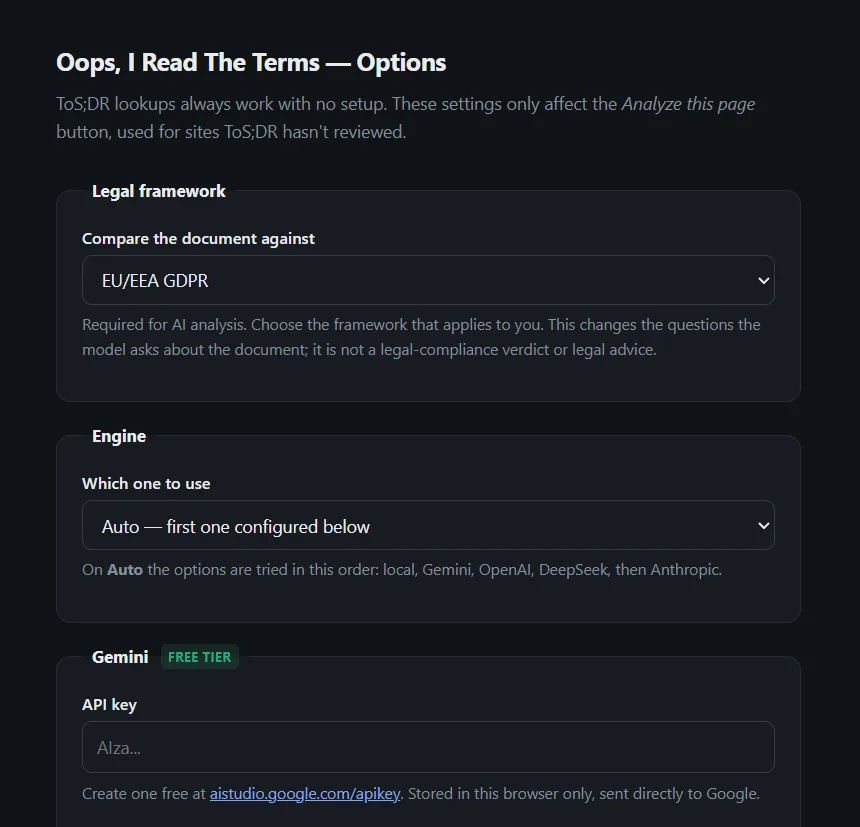
For anything ToS;DR hasn’t reviewed, the extension can read the policy itself with AI. It works with Gemini, Claude, OpenAI and DeepSeek. It can also use a model running on your own computer through Ollama or LM Studio, so nothing goes to an AI company and you don’t need a paid API key. Results are cached for each version of a document, so the same terms only get analysed once.
Where you live matters
Services often treat EU users differently from everyone else, because of GDPR. So you can pick the legal framework that applies to you (EU GDPR, UK GDPR, California, Brazil’s LGPD and a few others), and the AI checks the terms against it: what’s covered, what’s missing, and what’s worth double-checking. It’s not legal advice, and the extension says so.
My part
I was one of the developers. I worked on the extension itself (JavaScript, Chromium Manifest V3) and on adding LLMs to it, so it could go beyond ToS;DR: the OpenAI API, and models running locally through Ollama or LM Studio.
Design thinking first
Before writing any code we made empathy maps and personas: everyday users who just click “yes” on everything, privacy-conscious people, small business owners checking a SaaS contract, and students. The popup is built for the person who just wants a quick answer. The grade and the three worst points come first, and everything else stays hidden until you ask for it.
Screenshots