Projects /
Mobile app
Waypoint
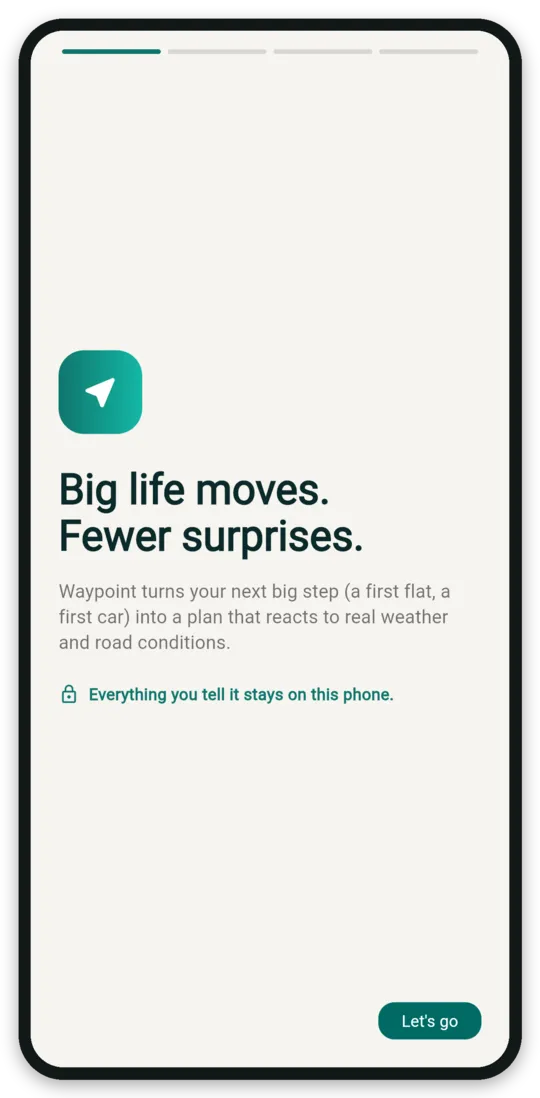
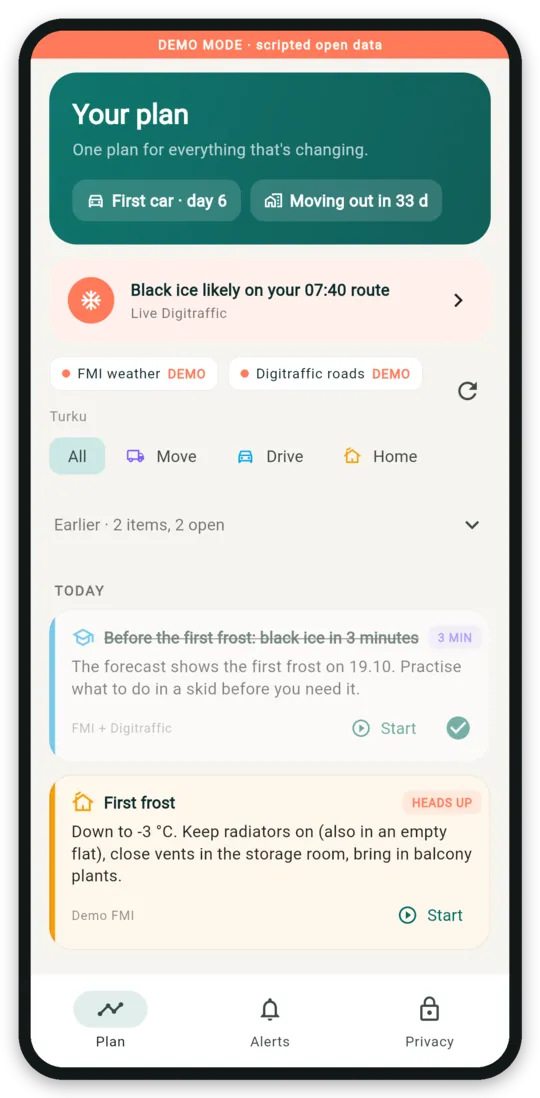
A phone app from JunctionX Turku Hackathon 2026. You tell it about something big that's coming, like your first flat or first car, and it gives you a plan that changes with the weather and road conditions.
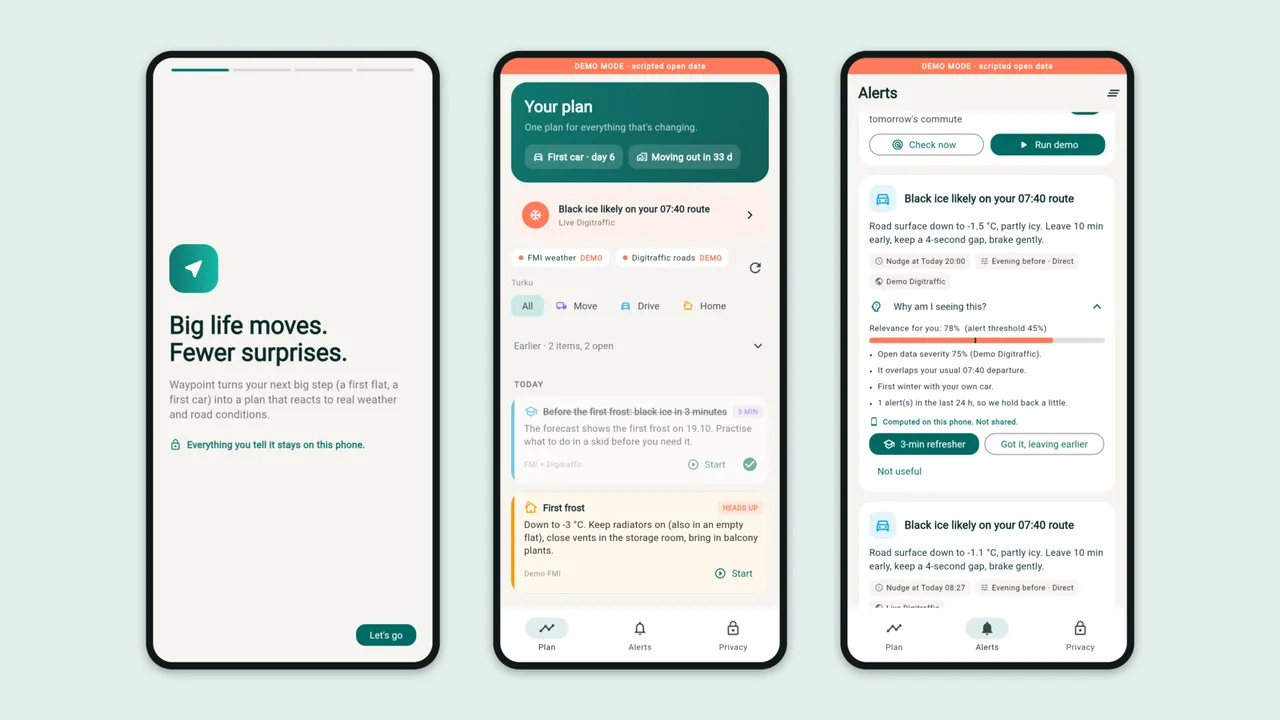
I made Waypoint on my own at JunctionX Turku Hackathon, for the challenge from If (the insurance company). The idea is simple: when something big is coming up, like moving into your first flat or getting your first car, the app turns it into a plan. And the plan changes when the real world does.
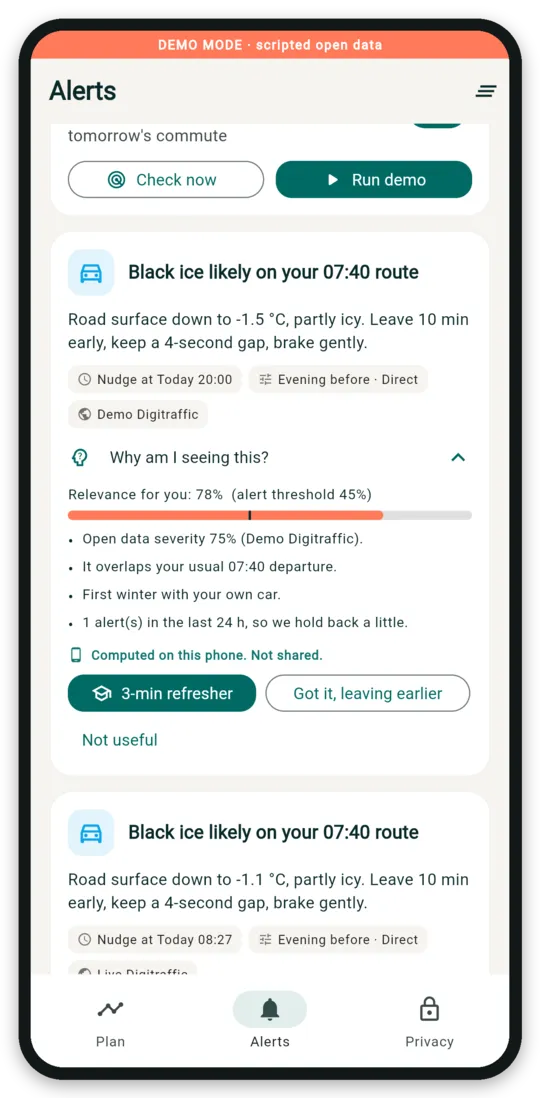
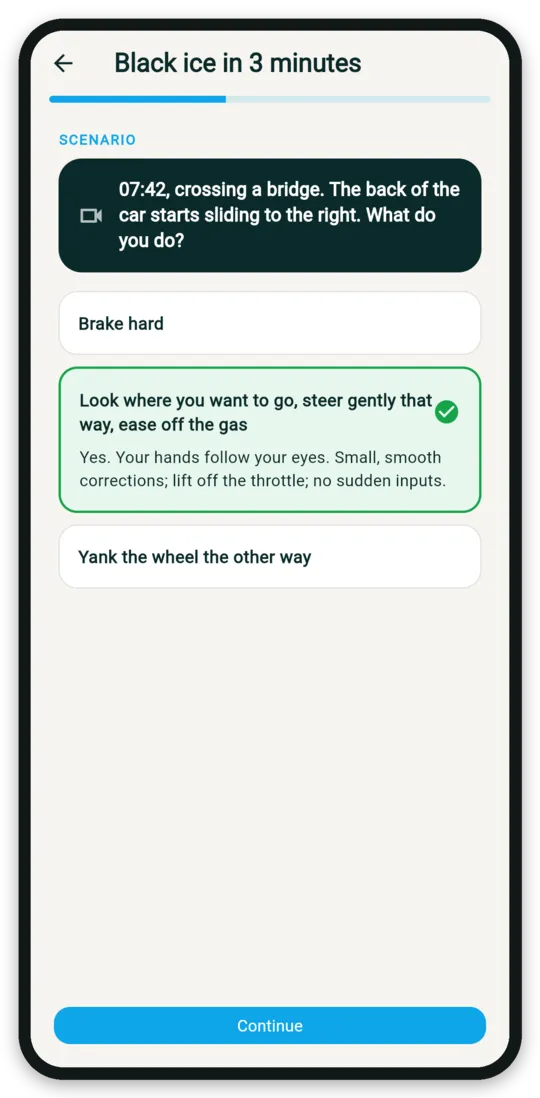
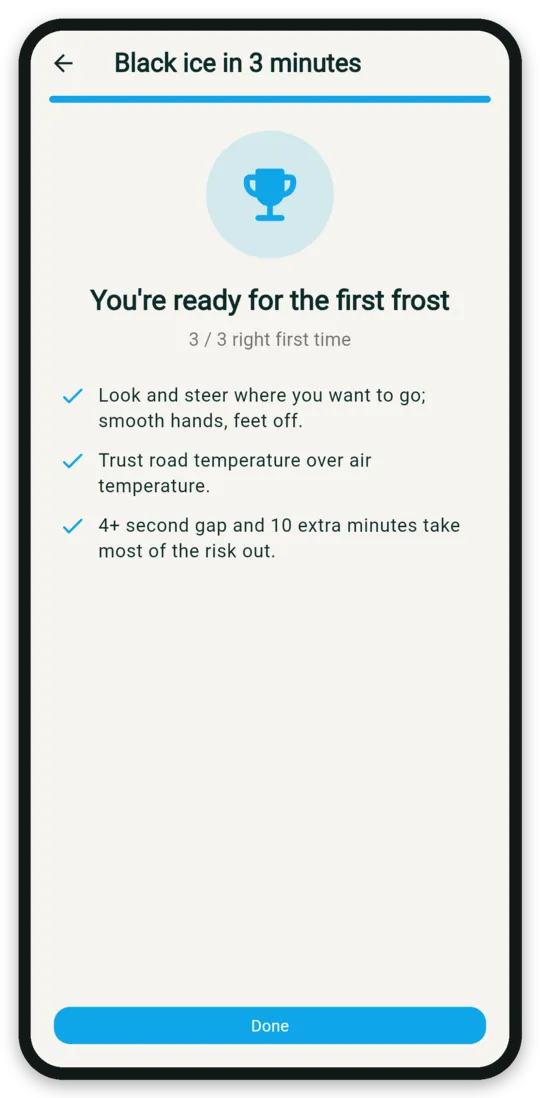
The example I used in the demo: it’s the first frosty morning of the year and you leave for work at 07:40. Road weather data says your route is icy. The evening before, Waypoint tells you, explains why it thinks this matters to you, and offers a three-minute refresher on driving on ice.
Where the data comes from
Weather comes from the Finnish Meteorological Institute and road conditions from Digitraffic. Both are free, open APIs. I used the older Digitraffic v1 endpoint on purpose, because it’s the only one that tells you why a road is slippery. If there’s no network, the app falls back to a cache and then to sample data, and it always shows which one you’re looking at.
Privacy
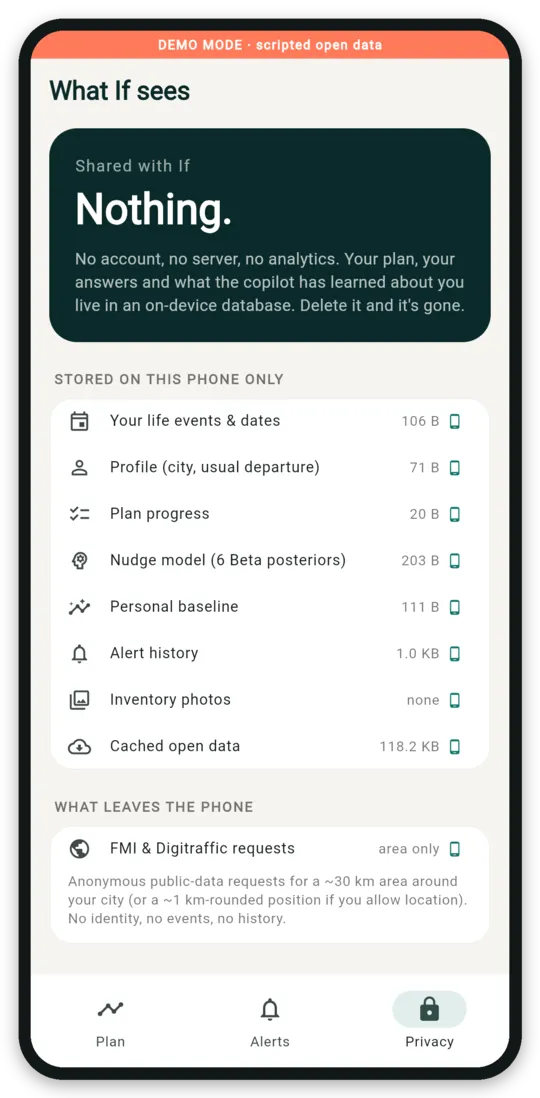
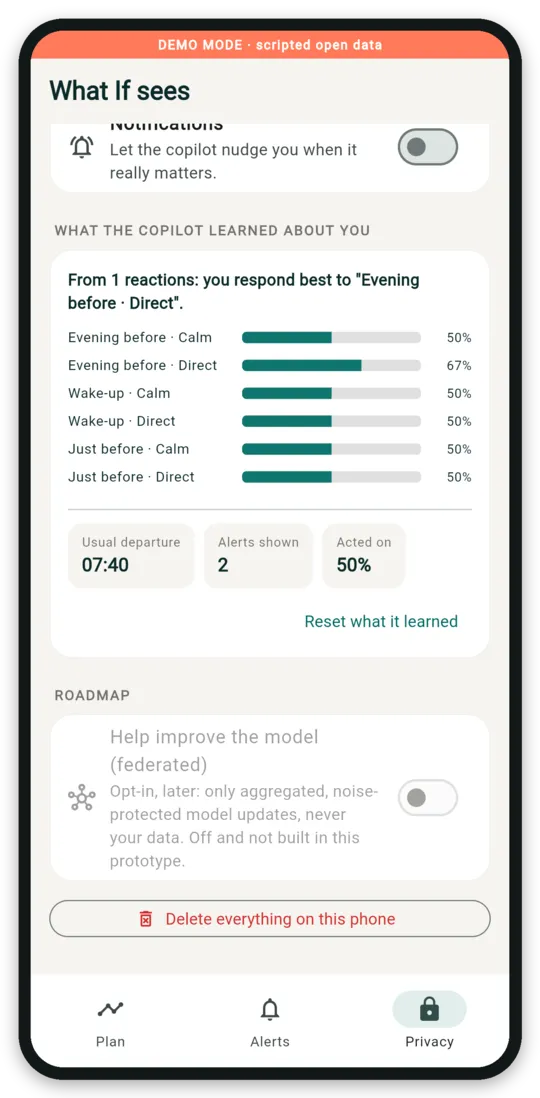
Nothing leaves the phone. The app learns which kind of reminders you actually react to, but that happens on the device. The privacy screen lists exactly what’s stored.
Building it
Flutter and Dart, with local storage in Hive CE. It runs on Android and in the browser. There’s also a demo mode with scripted data.
Where it could go next
My first idea was much bigger: a set of apps and a browser extension that learn your habits with ML, predict when something bad is likely to happen, and help you avoid it so the insurer doesn’t have to cover for damages. But this concept was quite problematic. In case if user’s data was being collected to If insurence’s own servers, and AI-processing power was used from their servers, watching everything a person does would never pass GDPR, and nobody wants that from their insurer anyway. So I kept the learning on the phone and cut it down to what fits in a weekend.
The way it’s built leaves room to grow:
- More life events. Every event, like moving, a new car or your home in winter, plugs into the same planning engine. Adding a wedding, a baby, a pet or a new job is a new module, not a new app.
- A local prediction model. Right now the app only learns which reminders you react to. The next step is the model I planned at the start: one that learns your routines, like when you usually leave and how often you drive in bad weather, and predicts the risky moments before they happen. It would still run only on the phone, and every signal (location, calendar, photos) would be a separate opt-in.
- Learning without sharing. With federated learning, the model could get better across many users while only model updates leave the phone, never anyone’s data.
- More places. Desktop applications and a browser extension were part of the original idea, and they would use the same engine, especially since Flutter is almost cross-platform framework which allow to make apps for multiple platforms and operating systems at the same time.
Screenshots